


When Enlightenment-era scholars taxonomized humankind, they chose homo sapiens, in part because of what they observed as a uniquely human aptitude for “taste.”
[“Taste” comes from the Latin taxare (to handle, to assess) – an intensive form of tangere (to touch). It is a term that via vulgar Latin blended with gustare (to taste, to try) to express the act of appraising something by physically handling or even consuming it. In proper Latin, there is the related term sapere, which carries a double meaning of “to taste” and “to be wise.” To taste, in the sense of sapere, is to possess wisdom through tangible experience.]
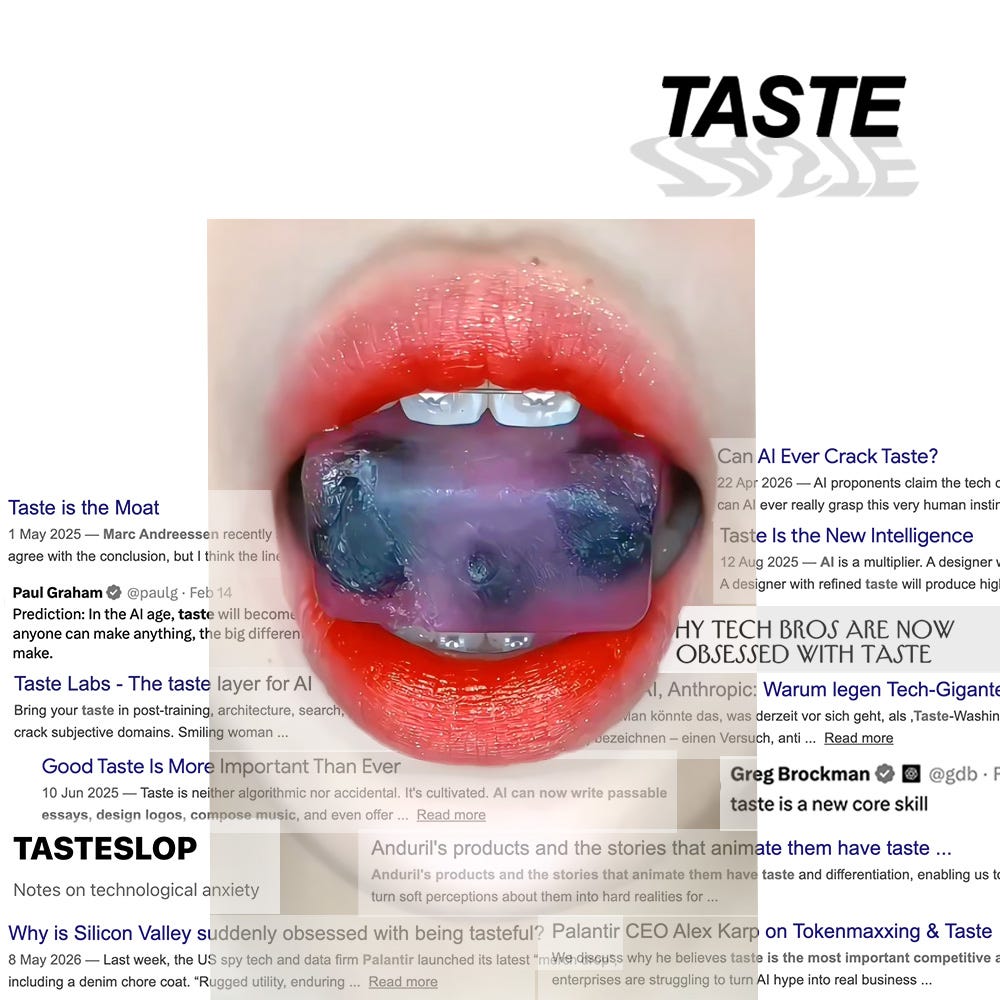
It’s remarkable that in recent years, and intensely in recent months, the idea of “taste”—“having taste,” “deploying taste,” “taste agents,” “integrating a taste layer,” “taste as a core skill,” “taste as moat”—has become an ultra-present concern in tech circles. Isn’t having taste (wherever one falls along the taste spectrum) an inherent quality of being human?
To be sure, there’s already a lot of writing on this phenomenon: “Tasteslop” by NEMESIS‘s Emily Segal and “Why Tech Bros Are Now Obsessed With Taste” by Kyle Chayka for the New Yorker being among the best takes. The most confounding, in our opinion being Y-Combinator cofounder Paul Graham’s “Taste for Makers” (Feb 2002, but highly cited this year).
There is also “Against Taste,” by Will Manidis, which makes some good points (patrons used to fund art for a higher power or at least public display whereas contemporary collectors tend to buy art for their own private use) but in its theory-of-everything aspiration, feels LLM-ish and contextually ahistorical. So in pure “Content Today” form, we are adding to the pile-on with our own fashionably late, probably factually botched but definitely human, free-associative conversation about taste.
Beyond the paywall, some NM notes on taste, but first here’s what else we’ve been up to since our last post…
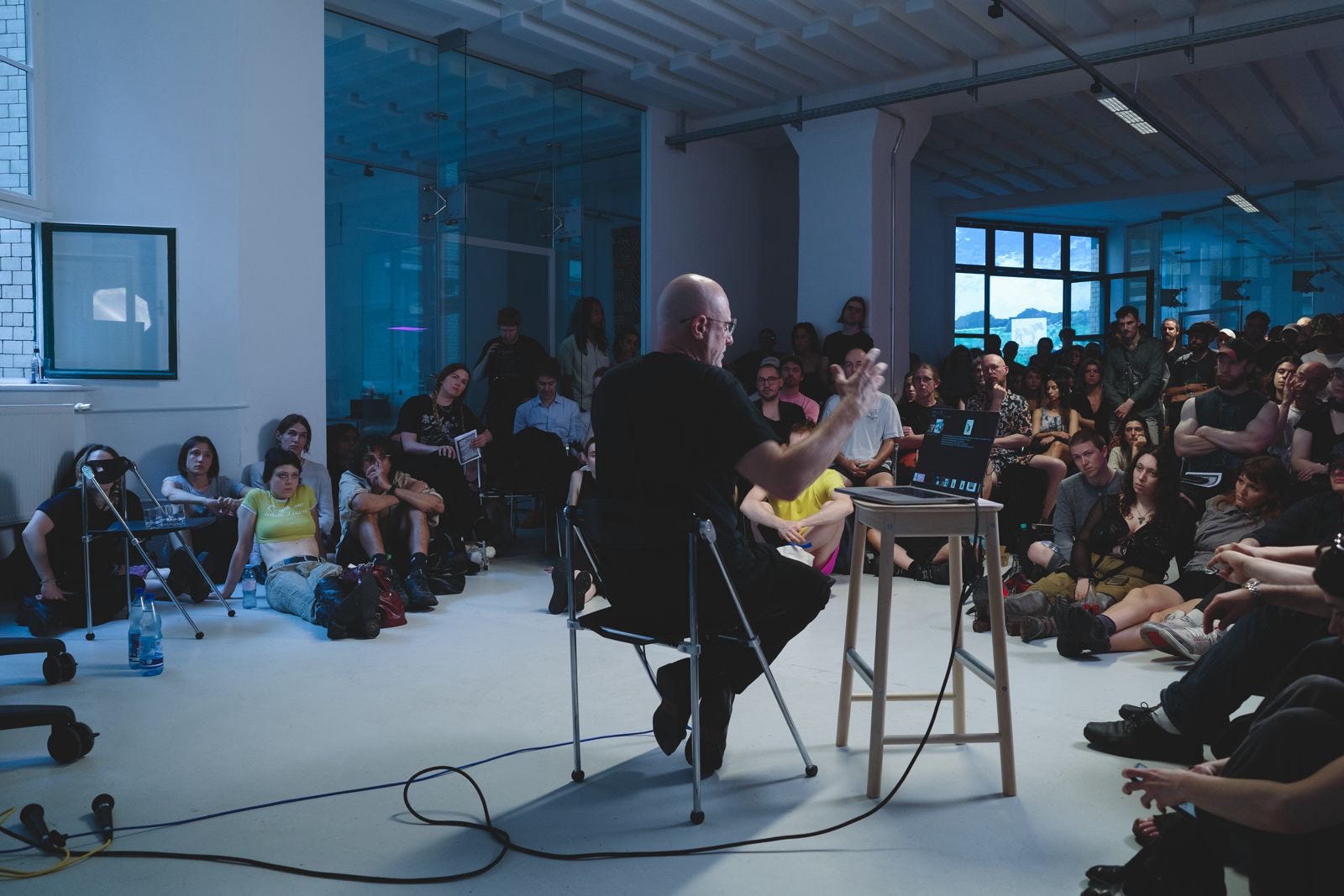
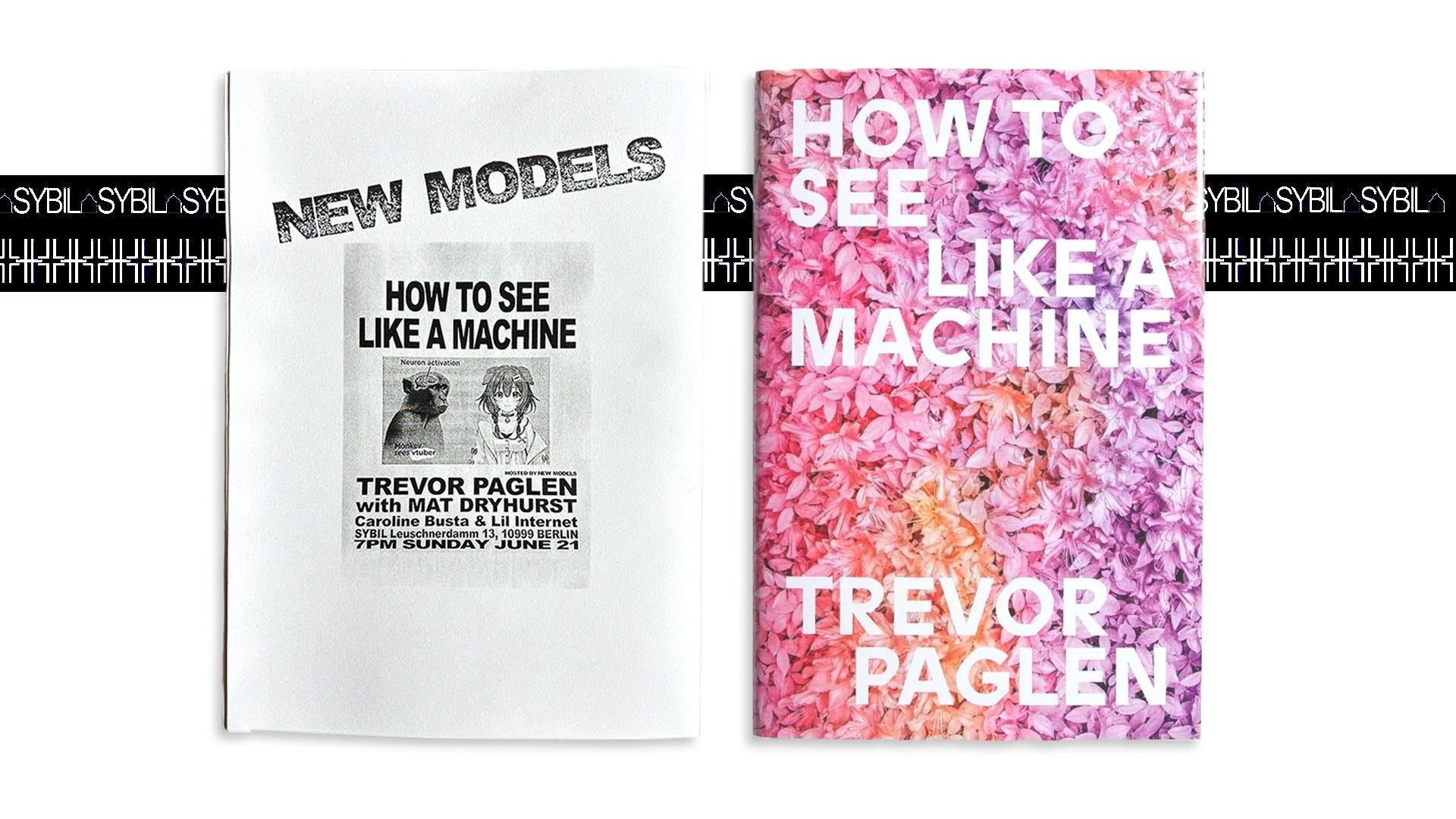
On June 21, as the solstice sun descended toward the horizon, we hosted artist Trevor Paglen at Sybil in Kreuzberg for the Berlin launch of his new book, How to See Like a Machine: Images After AI (Verso, 2026). The house was packed. Following Trevor’s intro, Mat Dryhurst joined, with Lil Internet & Carly moderating. We recorded everything. Teaser above. We’ll be sharing the full vid with you soon.
A few days later, Lil Internet gave an artist talk hosted by Spike at Berlin’s Soho House. It was Lil Net’s first-ever “artist talk” and he took the assignment very seriously, painstakingly excavating 3 decades of life online to tell a story that spanned from the ’90s (Web 0.0) to the present.


